
A Common After-Effect of Flu, COVID-19 and Fever
Hair loss can sometimes appear weeks or even months after a viral infection, such as a severe flu, COVID-19, or another febrile illness. While this can be alarming, it is often a temporary and reversible condition known as telogen effluvium.

What Does a Viral Infection Have to Do With Hair Loss?
A viral infection places significant stress on the body. During illness, the immune system shifts into high gear to fight off viruses and support recovery. This process requires a large amount of energy.
As a result, non-essential functions, including hair growth, may be temporarily deprioritised.
This response can cause more hair follicles than usual to move from the growth phase into the resting (shedding) phase.
What Happens Inside the Body?
When the body is fighting an infection:
-
- Immune cells are activated to eliminate viruses
- Energy is redirected to healing and recovery
- Blood supply to the hair follicles may be reduced
This can cause hair to exit the anagen (growth) phase and enter the telogen (resting) phase prematurely — a condition known as telogen effluvium.
Why Does Hair Loss Start After You’ve Recovered?
Hair affected by telogen effluvium does not fall out immediately.
Instead:
-
- The hair remains loosely anchored in the scalp
- Shedding becomes noticeable weeks to three months after recovery
- Hair loss can last six to nine months, depending on the individual
This delayed reaction is why many people only link hair loss to an infection long after they feel well again.
Will the Hair Grow Back?
The good news is that hair follicles are usually not damaged. In most cases:
-
- Hair growth resumes naturally
- Regrowth may feel slow (hair grows about 1 cm per month)
- Hair may appear thinner for some time as density rebuilds
With the right support, healthy regrowth is very possible.
Supporting Hair Regrowth After Infection
Supporting the hair during recovery can help improve regrowth quality and reduce prolonged shedding. Products that nourish the hair root and support follicle activity are particularly beneficial.
How Thymuskin Can Help
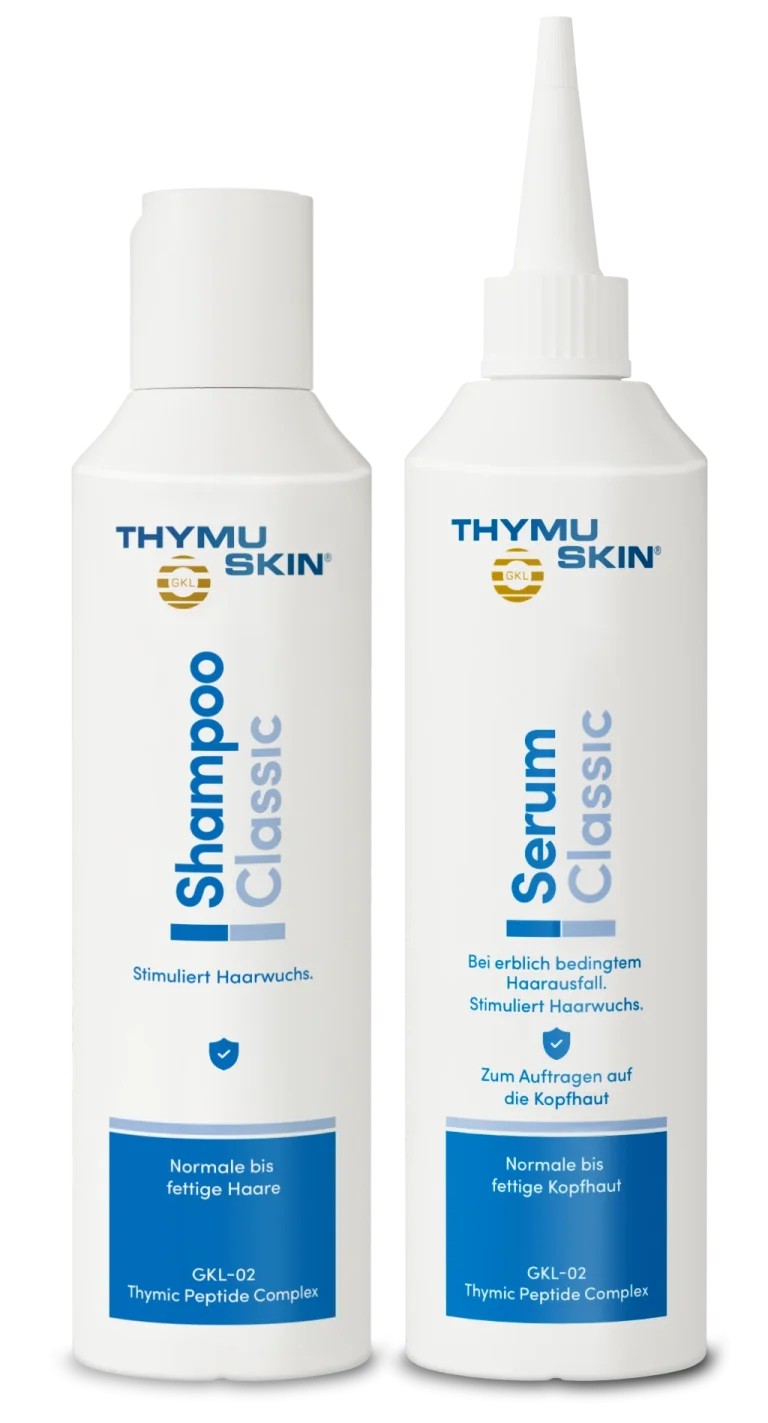
Thymuskin Shampoo and Serum are designed to act directly at the hair root, supporting the hair growth cycle during periods of stress-related shedding.
Innovative GKL-02 Thymic Peptide Complex
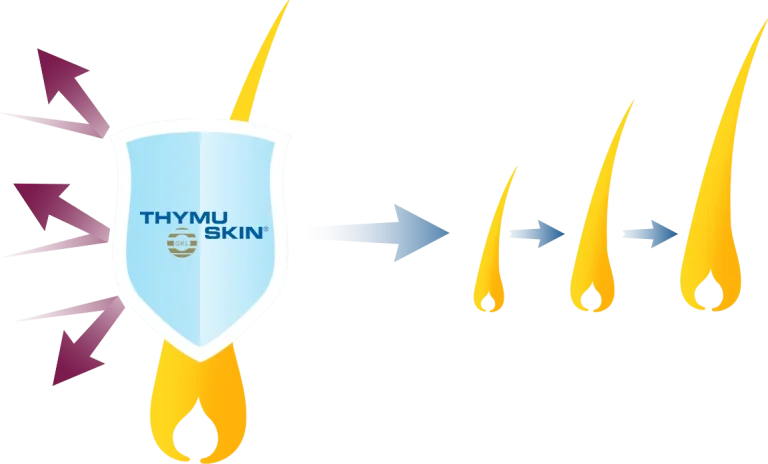
Thymuskin contains the patented GKL-02 Thymic Peptide Complex, which supports hair growth by:
-
- Activating hair cells (keratinocytes)
- Stimulating hair formation in the hair matrix
- Supporting a longer, healthier growth phase
Clinically Observed Results
In a clinical study* involving 184 women and 57 men with chronic telogen effluvium:
-
- 99% experienced a reduction in hair loss
- Participants used Thymuskin Shampoo and Serum over 6 months
*Barbareschi M. et al.
A Reassuring Reminder
Hair loss after illness can be distressing, but it is often temporary. With patience, stress management, and targeted scalp support, hair can recover and return to a healthy growth cycle.